Without Movement Pauses
Relative lower-limb circulation index declines steadily during uninterrupted sitting.
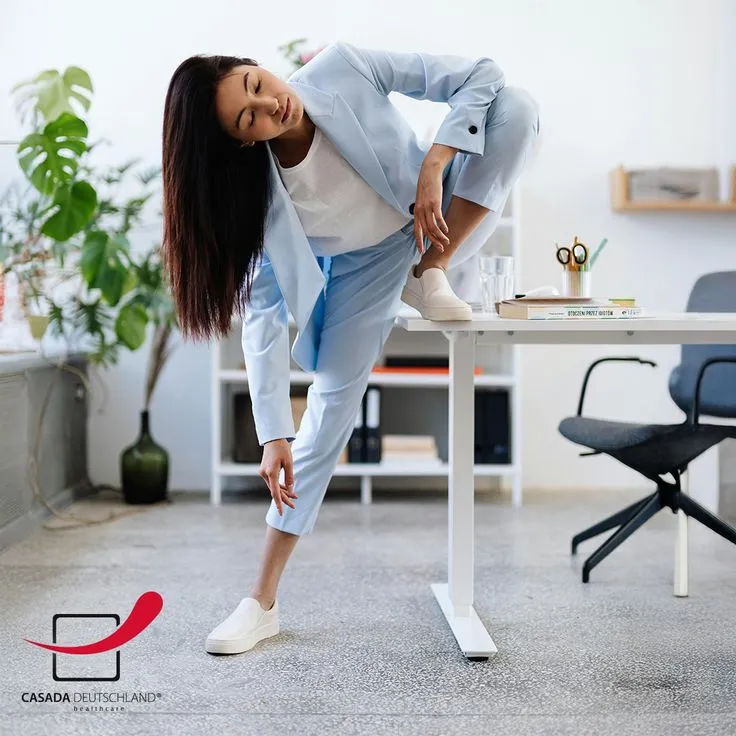
Based on aggregated peer-reviewed studies. Values represent relative change during an 8-hour seated work period.
Relative lower-limb circulation index declines steadily during uninterrupted sitting.
Short standing or walking breaks help maintain circulation levels closer to baseline.
| Position | Relative Load Index | Notes |
|---|---|---|
| Standing | 100 | Baseline reference |
| Sitting upright | 140 | Standard desk posture |
| Sitting slouched | 185 | Common after 2+ hours |
| After 3-min movement break | 120 | Observed reduction post-pause |
Data compiled from ergonomic research literature. Indices are comparative, not absolute measurements.
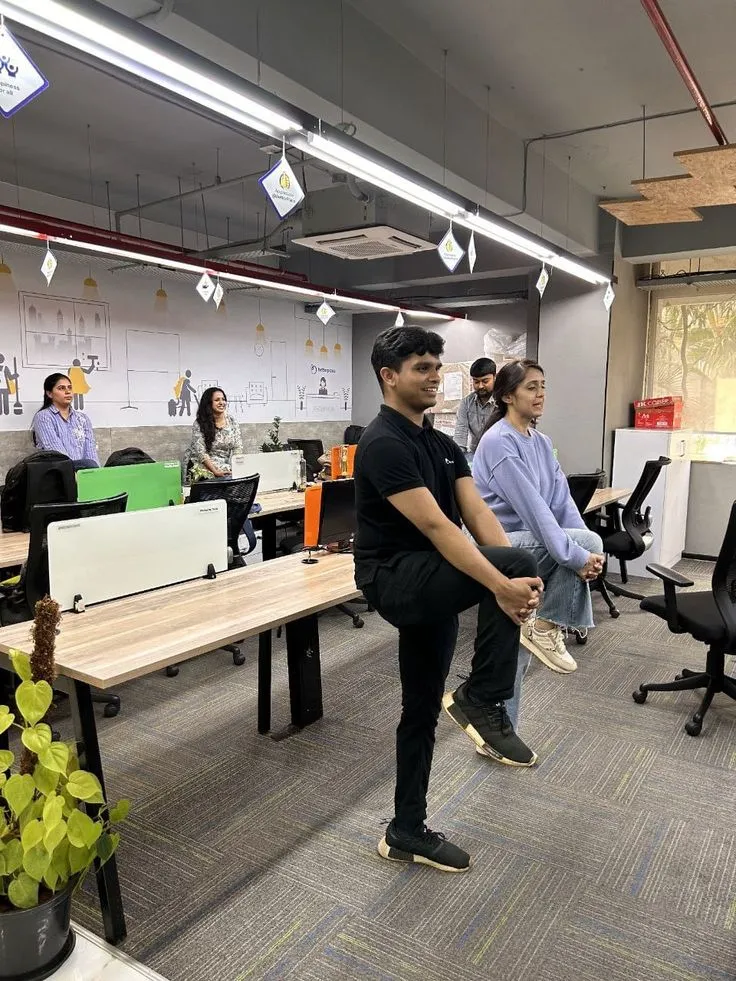
Studies on desk workers indicate that short physical pauses every 45–60 minutes correlate with maintained self-reported focus scores over an 8-hour period, compared to uninterrupted sitting blocks.
These findings support the case for structured micro-breaks — not as a productivity hack, but as a reasonable workplace practice.
Summary documents for HR teams and wellness coordinators. Neutral, citation-based content suitable for internal presentations.
8-page summary of sitting-related workplace patterns and movement pause recommendations.
Request PDFFramework for introducing micro-breaks without disrupting existing workflows.
Request PDFFull bibliography of peer-reviewed sources referenced on this page.
Request PDFWe use cookies to improve site functionality and analyze traffic. You can accept or decline non-essential cookies. See our Cookies Policy for details.